
Good morning, AI enthusiasts. Nvidia has introduced Alpamayo, a suite of open-source AI models designed to enable autonomous vehicles to think and plan more like humans, improving their response to complex and rare driving scenarios.
By offering developers new simulation and synthetic data tools, Alpamayo aims to deepen physical AI reasoning for safer self-driving cars. How will this approach reshape the pace of innovation and real-world adoption in autonomous driving technology?
In today’s AI recap:

From Larry Bruce:
"Nvidia's Alpamayo models mark a leap forward in how autonomous vehicles use AI to plan and act like humans — a crucial step for real-world driving safety and efficiency. This release offers developers powerful new tools to advance autonomous driving software faster and with deeper physical understanding." — Larry Bruce, BDCbox
The Recap: Nvidia revealed Alpamayo, a family of open-source AI models and toolkits that let autonomous vehicles reason and plan with human-like intuition, including handling rare and complex driving scenarios.
Unpacked:
Bottom line: Alpamayo pushes the frontier in autonomous vehicle AI by blending large-scale reasoning with practical developer tools. This creates fresh opportunities for innovation in automating transportation safety and efficiency today.

"Nvidia just raised the bar for AI hardware at CES 2026 with Rubin, a chip architecture built to accelerate AI training and inference. Professionals relying on AI-driven tools will soon access faster, smarter systems that help automate complex tasks and unlock new productivity gains."
The Recap: Nvidia’s launch of Rubin introduces a new AI chip architecture delivering 3.5x faster training and 5x faster inference speeds than its Blackwell predecessor. Rubin uses a multi-chip design with CPUs specialized for agentic reasoning and improved storage to meet modern AI demands.
Unpacked:
Bottom line: Rubin’s breakthroughs make AI more responsive and capable, empowering professionals to build tools that automate detailed workflows. Faster training and smarter inference on Rubin means your AI-driven projects can evolve more quickly and deliver better results.

"Nvidia’s new full-stack robotics ecosystem signals an exciting shift in how professionals can develop AI-powered machines that think and act like humans. This platform promises to make robotics development faster, more accessible, and standardized—key for entrepreneurs and developers eager to lead in physical AI applications."
The Recap: Nvidia unveiled a comprehensive robotics ecosystem at CES 2026, featuring foundation models, new simulation tools, and the Jetson T4000 GPU. The company aims to become the go-to platform for general robotics development, similar to Android’s role in smartphones.
Unpacked:
Bottom line: Nvidia’s ecosystem offers a practical framework to accelerate robotics innovation, making intelligent machines more attainable for professionals. This push bridges AI software advances with physical robots that can transform industries and workflows.
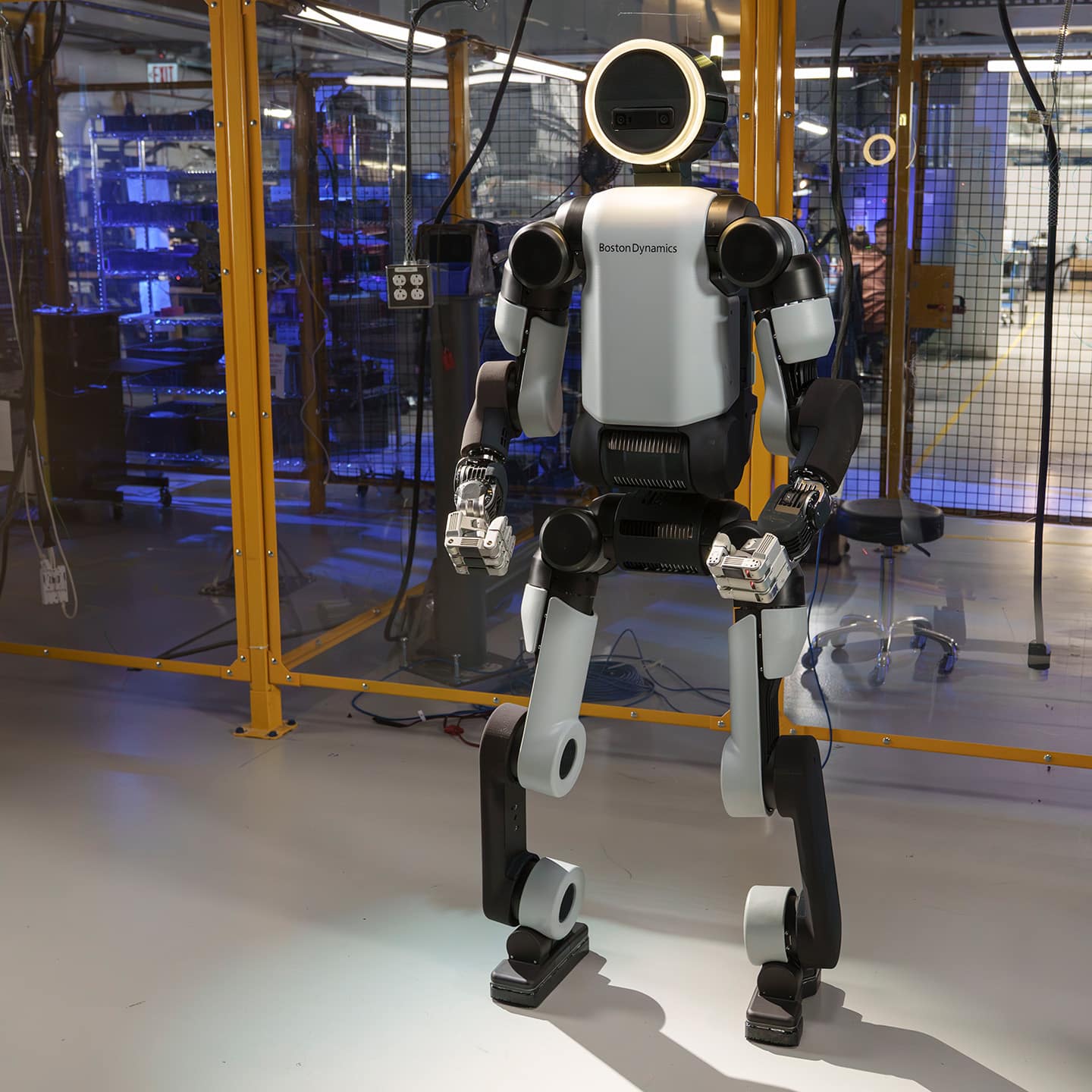
"Google DeepMind's latest partnership with Boston Dynamics marks a major step toward embedding advanced AI into physical robotics. Professionals eager for powerful automation tools can expect smarter, more adaptable machines on the horizon."
The Recap: Google DeepMind announced a partnership with Boston Dynamics to integrate its Gemini Robotics foundational AI models into the Atlas humanoid robot, aiming to combine AI reasoning with robotic hardware for next-level automation. Learn more about this DeepMind collaboration.
Unpacked:
Bottom line: This collaboration pushes the frontier of AI-powered robotics by making machines more capable of understanding and navigating the physical world. Professionals can anticipate smarter automation tools that directly boost efficiency and task adaptability in real settings.
UBTECH showcases the Walker S2 humanoid robot playing tennis with impressive agility and precision, signaling advances in physical AI and robotics that could make robots more athletic and interactive.
Amazon rolls out Alexa+ on the web through Alexa.com, expanding its AI assistant beyond devices to become a family-focused agent-style chatbot handling tasks from smart home control to calendar management and grocery shopping.
Google previews new Gemini AI features for Google TV that let users verbally navigate, deep-dive into content, remix personal photos with AI, and adjust TV settings without interrupting their watching experience.
Qualcomm unveils the Snapdragon X2 Plus chip at CES 2026, boosting AI processing power and efficiency for mid-tier laptops and enabling more affordable AI-capable devices with longer battery life.
Microsoft urges a new mindset on AI, with CEO Satya Nadella calling for a shift from seeing AI as “slop” to embracing it as a “bicycle for the mind” that amplifies human potential rather than replacing workers, citing early positive labor market data.
