
Good morning, AI enthusiasts. OpenAI has deepened its commitment to accelerating AI adoption through a strategic investment in Thrive Holdings, embedding its teams directly into AI-powered companies within that portfolio. This approach blends investment and operational support to help businesses integrate AI tools faster and more effectively.
By creating a circular partnership with Thrive, OpenAI is exploring new ways to boost AI’s real-world impact and potentially raise technology valuations. How might this model influence the broader AI investment ecosystem and drive wider adoption across industries?
In today’s AI recap:

From Larry Bruce:
"OpenAI’s innovative investment in Thrive Holdings marks a new chapter in how AI companies collaborate to drive faster, broader AI application. Professionals focused on AI’s business impact will find this move signals greater integration of AI tools in real-world operations."
— Larry Bruce, BDCbox
The Recap: OpenAI recently took an ownership stake in Thrive Holdings, a company bundling AI-enhanced firms, in a circular investment deal designed to accelerate AI adoption within Thrive’s portfolio. This strategic partnership aims to embed OpenAI teams directly within these companies, potentially inflating valuations based on AI’s expanding impact. Learn more.
Unpacked:
Bottom line: OpenAI’s approach signals how AI firms can collaborate through investment and operational ties to expand AI’s reach. Keeping an eye on such deals helps professionals anticipate the next wave of AI tools changing how work gets done.

From Larry Bruce:
"Nvidia’s latest model pushes autonomous driving research forward by letting AI combine vision and language to 'think' more like a human driver. For professionals eager to automate complex tasks, this step shows how AI can bridge perception with reasoning in real-world applications."
The Recap: Nvidia announced Alpamayo-R1, the first vision-language reasoning model built specifically to improve autonomous driving. This open-source model helps AI better 'understand' and reason about driving environments, bringing us closer to safer, smarter self-driving systems.
Unpacked:
Bottom line: Combining language and vision gives AI a richer way to interpret driving scenes, enhancing decision-making on the road. This breakthrough offers a powerful tool for developers aiming to build next-gen autonomous systems with deeper understanding and reliability.
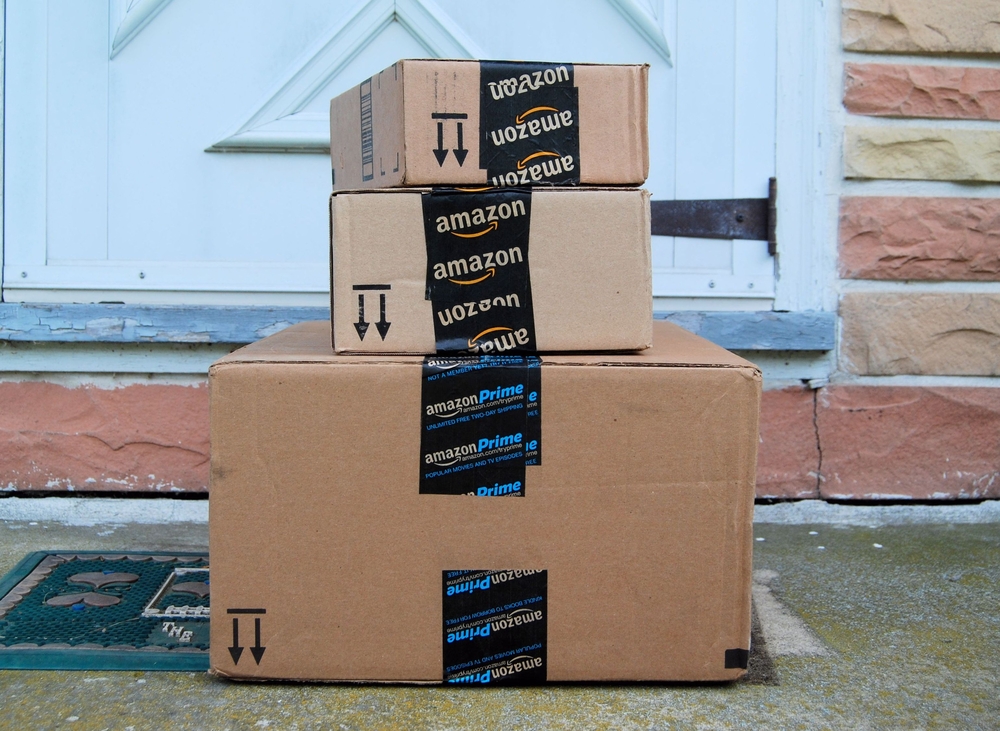
"Amazon’s AI shopping assistant Rufus shows how task automation can significantly boost results. This development highlights AI’s growing role in streamlining not just internal workflows but also enhancing customer experiences and outcomes, a key point for professionals aiming to stay ahead in AI adoption."
— Larry Bruce, BDCbox
The Recap: Amazon’s AI chatbot Rufus doubled purchase sessions during Black Friday compared to the prior month, dramatically outpacing non-AI-assisted shopping behavior and signaling strong consumer trust in AI-driven product discovery.
Unpacked:
Bottom line: AI chatbots like Rufus prove that automating customer interactions doesn’t just save time—it directly increases sales and enhances user engagement. As AI becomes more embedded in commerce, professionals should explore how these tools can amplify results in their own workflows or businesses.

From Larry Bruce:
"Black Forest Labs’s recent funding round highlights the growing appetite for powerful AI tools that enhance creative workflows. This segment reveals how advanced image generation is gaining serious investment and market trust, a key signal for professionals exploring AI-driven productivity boosts." — Larry Bruce, BDCbox
The Recap: Black Forest Labs secured $300 million in Series B funding, valuing the startup at $3.25 billion. Known for their Flux 2 model, they deliver style-conscious 4K image generation and editing to advance visual AI capabilities.
Unpacked:
Bottom line: This major funding confirms strong market demand for AI that helps professionals automate visual content workflows. Staying updated on Black Forest Labs means tracking key advances in how AI reshapes creative productivity.
For more, visit Black Forest Labs for the full funding details.
Nvidia invested $2 billion into Synopsys, aiming to accelerate the shift in chip design workflows from CPU to GPU, reinforcing its grip on semiconductor software amid rising scrutiny of circular AI-industry deals.
Nvidia announced new open AI models and tools for autonomous driving research, spotlighting its physical AI push with the open-source Alpamayo-R1 vision language model and Cosmos Cookbook for developers.
Construction workers building data centers powering AI are cashing in on the boom with pay jumps of 25% to 30%, as tech giants race to meet unprecedented demand amid a shortage of skilled labor.
Data center energy demand is forecasted to soar nearly 300% by 2035, with new large-scale facilities pushing electricity consumption to 106 gigawatts, driven largely by AI training and inference workloads.
